

TAT readers,
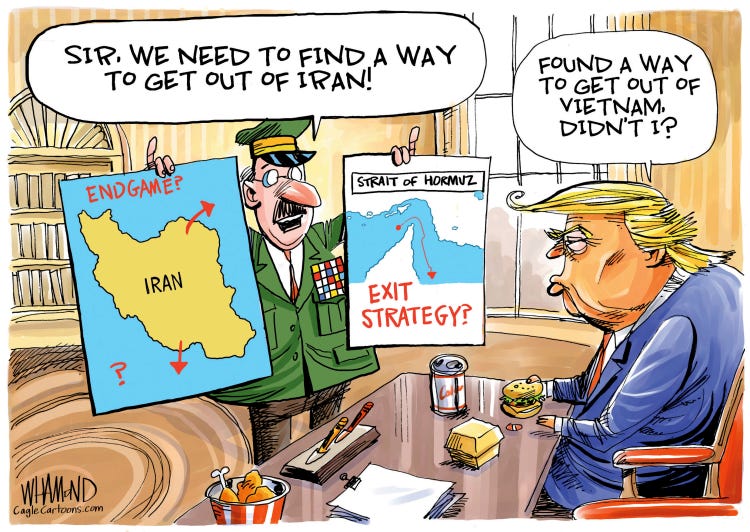
Welcome back from the long holiday weekend. Like most of you, I attempted to catch my breath for a couple of days, but the regime running our government is incessantly lurking in the background and undermining our lives, while destroying our economy and national security in the process. If we are to have any hope of extricating ourselves from this greedy war for oil and power, we must be well-informed enough to put relentless pressure on every single, sitting republican congressman or senator. Only their support to the other side of the aisle, can achieve any restraint on the lunacy in the Oval Office.
As citizens, we have every reason to act and all it takes is a trip to the gas station or a supermarket to know why. The threat to our national security, has grown exponentially as well in the past 5 weeks. This issue has been poorly covered by most mainstream reporting, whose entities have either willingly or have been coerced into handling the administration with “kid gloves.” The truth is, the war is not going well for us and the administration has via incompetence, handed the Iranian regime the lion’s share of the leverage in negotiations.
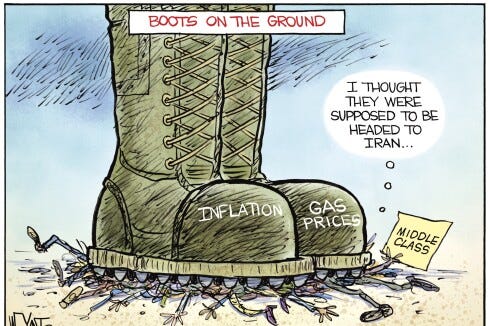
Today’s essay, the sixth in the series will largely deal with why I believe the US to be now far weaker globally, too deeply entrenched in the financial disasters they continue to cause and which can be best described with an old Argentine slang word, quilombo.
"In Lunfardo (A Buenos Aires largely Spanish dialect), the word “quilombo” means a mess, scandal, uproar, disorder, or conflict. In the past, quilombo strictly referred to brothels or so-called houses of ill repute; however, as the term evolved, it began to be applied to disorganized or messy conditions or situations of conflict."

- The Meaning of ‘Quilombo’
- Transpanish
- 2011
As this is the latest in this series of essays, I will link the first five parts below, before beginning the body of this essay.
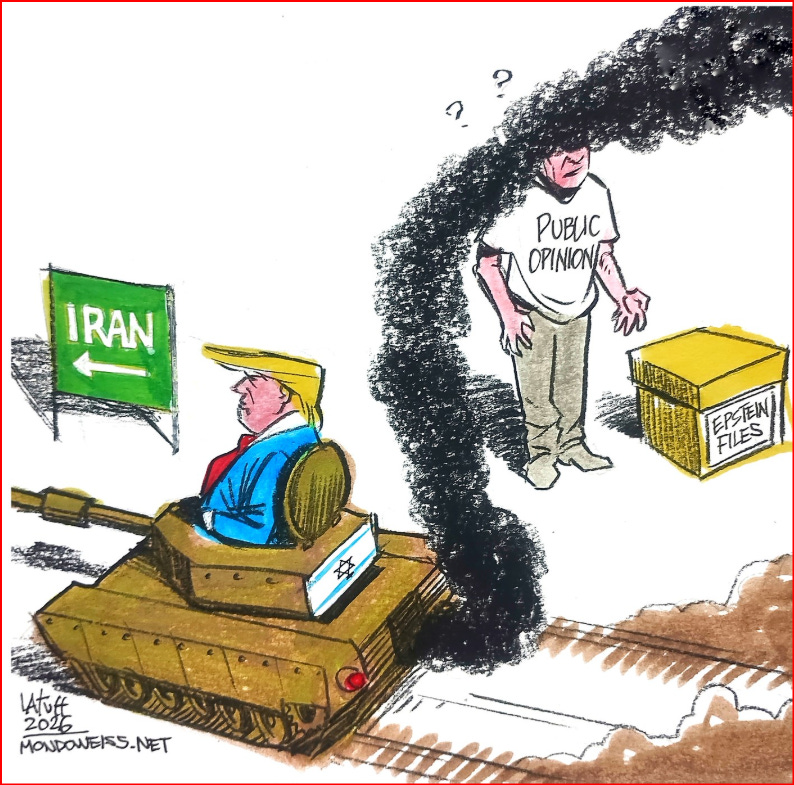
Now let’s get to the facts about this ever-worsening, global quilombo created by Trump, his administration and some of his wealthiest oligarchs.
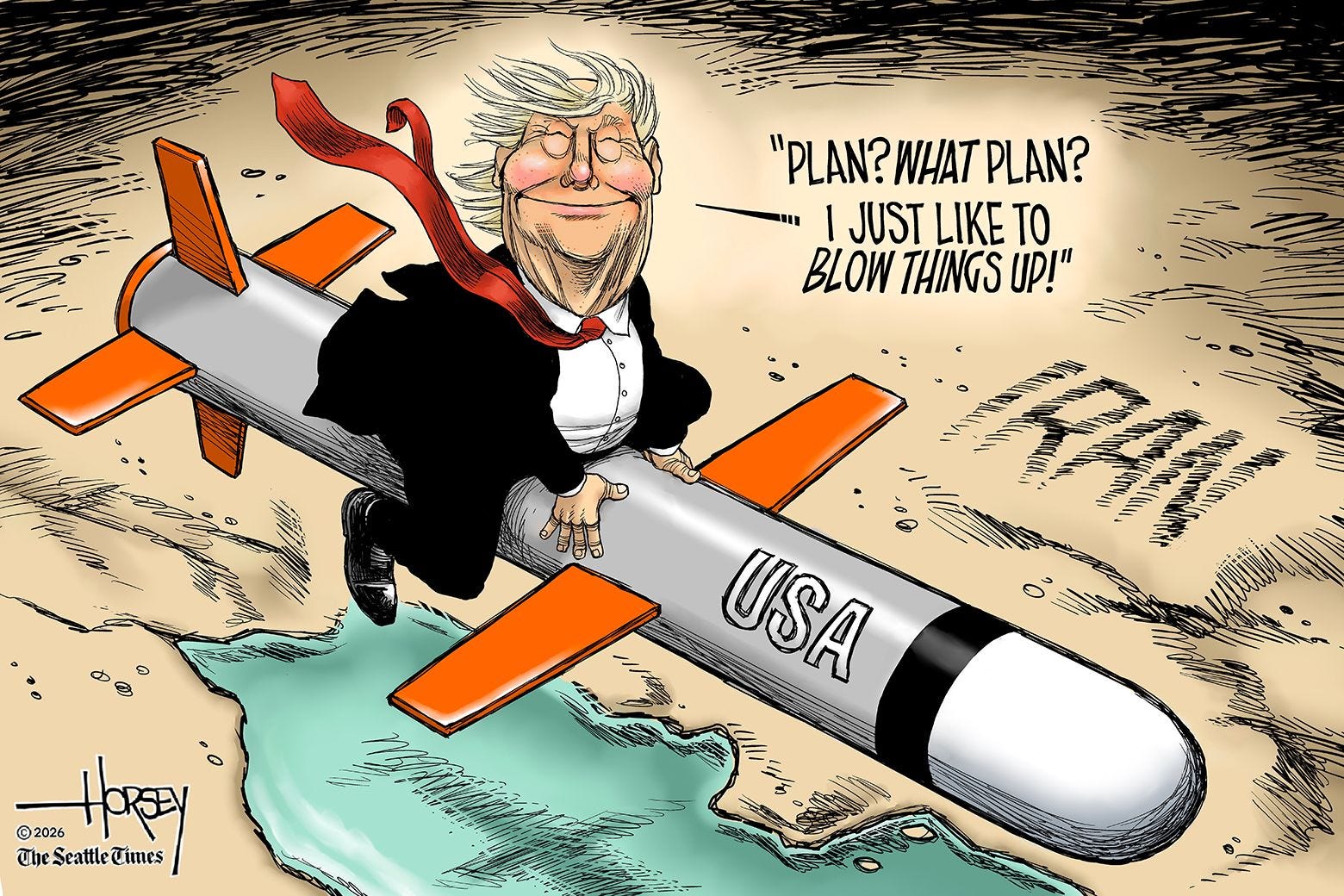
Let’s start with the economic implications for the US and the globe, resulting from entering a war without a declared reason. To be perfectly clear, we still have no idea why we are at war in the first place. As of March 6th, The Atlantic had already isolated 10 separate rationales for the US joining Israel against Iran. I have also lost focus on the “why” and simply because it no longer matters. The old saying, “when in a hole, the first order of business is to stop digging,” comes to mind here. We’re in a deep hole with this ill-advised war and yet, the administration hasn’t stopped digging us in deeper.
"On the third day of the war in Iran, Defense Secretary Pete Hegseth called Operation Epic Fury the “most-precise aerial operation in history.” A difficult claim to fact-check. More difficult still has been parsing statements from the White House and the Pentagon to figure out, with any exactitude, why we are at war in the first place. So far, the Trump administration has offered at least 10 separate rationales in just six days."

- Six Days of War, 10 Rationales
- The Atlantic
- By Marie-Rose Sheinerman and Isabel Ruehl
- March 6th, 2026
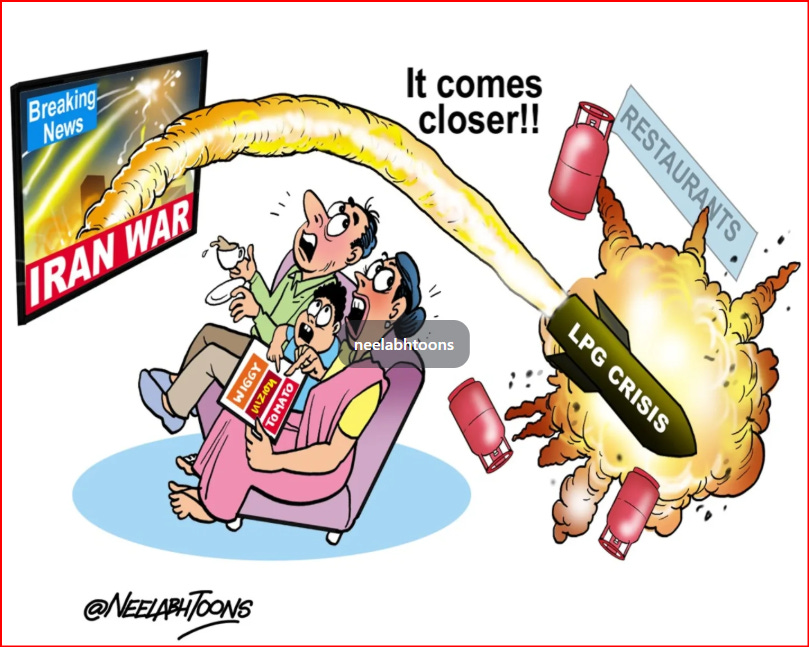
So where does this war leave us, the American people, at this point in time? This is a tough question to answer simply, so let’s take a look at some supporting evidence. A good place to start are with some of the facts included in a Washington Post article this past Saturday. Below are a handful of quotes from the referenced article. As a warning, they are not optimistic.
- "Americans, by a margin of 56 percent to 7 percent, expect the war to have a “mostly negative impact” on their personal financial situation, according to a March 31 Ipsos poll. A Middle East conflict that lasts for several more months would almost certainly spread higher prices and supply chain disruption beyond Asia and Europe to American shores.

- "A three-month interruption of normal maritime commerce would drive oil prices to $170 per barrel, said Bloomberg Economics. If the war lasts for six months, the global economy — starved of 13 million barrels of oil each day — would sink into a recession, Oxford Economics said on Thursday."

- "But Americans’ war tab is mounting. Regular gasoline prices now top $4.09 per gallon, according to AAA. At $5.53 per gallon, diesel — which powers the freight and farm sectors — is approaching the all-time high of $5.82, reached after Russia’s 2022 invasion of Ukraine."

- "The strait’s closure, cutting off crude oil shipments to Asia, means that petrochemical plants in places like India and China are running short of the feedstock they use to make all kinds of products, including cosmetics, auto parts, paints, household cleaners, beverage containers and aerospace components."

- "Three of the world’s top 10 producers of urea and anhydrous ammonia fertilizer — Saudi Arabia, Qatar and Iran — are in the conflict zone. Most American farmers have already locked in their fertilizer orders for this year’s plantings, though those who have not will face soaring bills, according to Krista Swanson, chief economist of the National Corn Growers Association."

- "The closure of the strait has blocked roughly one-third of the global supply of another critical industrial input, helium, which is a by-product of natural gas production. The loss of Qatar’s Ras Laffan gas complex, heavily damaged by Iranian missile and drone strikes last month, will depress global supplies of the industrial gas for up to five years."

- "The price of urea fertilizer, for example, is up roughly 50 percent since the end of February. If the war lasts into May, farmers will still confront high prices in August when they order next year’s fertilizer, she said.

“If this continues on, this will be an issue for all corn growers for the 2027 crop,” Swanson said."

- The war’s economic impact could get worse for Americans
- The Washington Post
- David Lynch
- April 4th, 2026
Across the pond at Oxford University, their prognosis is just as dire as the Washington Post’s.
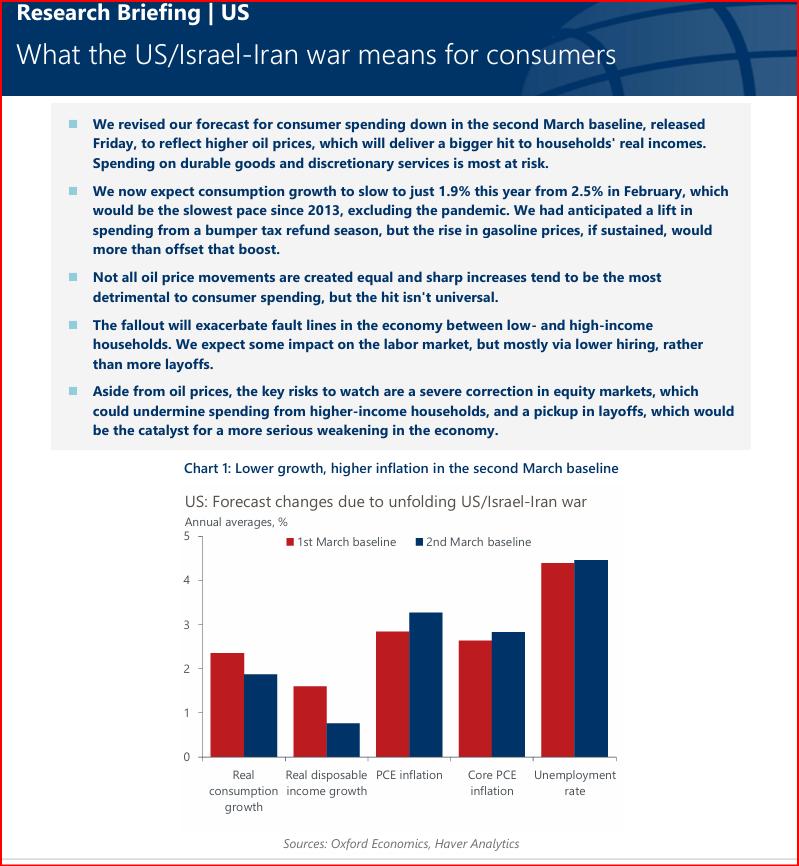
In the graphic above, it is quite easy to see that American households will have less disposable income, higher inflation and higher unemployment. Overall, this will drop consumer spending to %1.9 compared to the %2.5 last February, the worst numbers since 2013, excluding the pandemic period. Such a significant drop in the amount of disposable money left over for families, hurts retail and wholesale businesses the worst. Fuel prices, which are not likely to improve significantly for quite a while, are doing the most damage to individual households. With national spikes in electricity, fossil fuels for heat, transportation and industry, working Americans will experience significant financial hardship, in addition to our current affordability hurdles.
In Europe, nations are now calling on a “profit-cap” on energy companies, in order to offset the threat to the European economies and their citizens. There is even consideration that potentially, the entire EU could back a similar measure. While that the current Republican-led US Congress would never consider a similar measure until they become more desperate closer to the midterms, it will be us, the taxpayers that will ultimately pay the bill for the likely federal bailouts to select industries like farming, for the harm done to them by the callous recklessness of the administration.
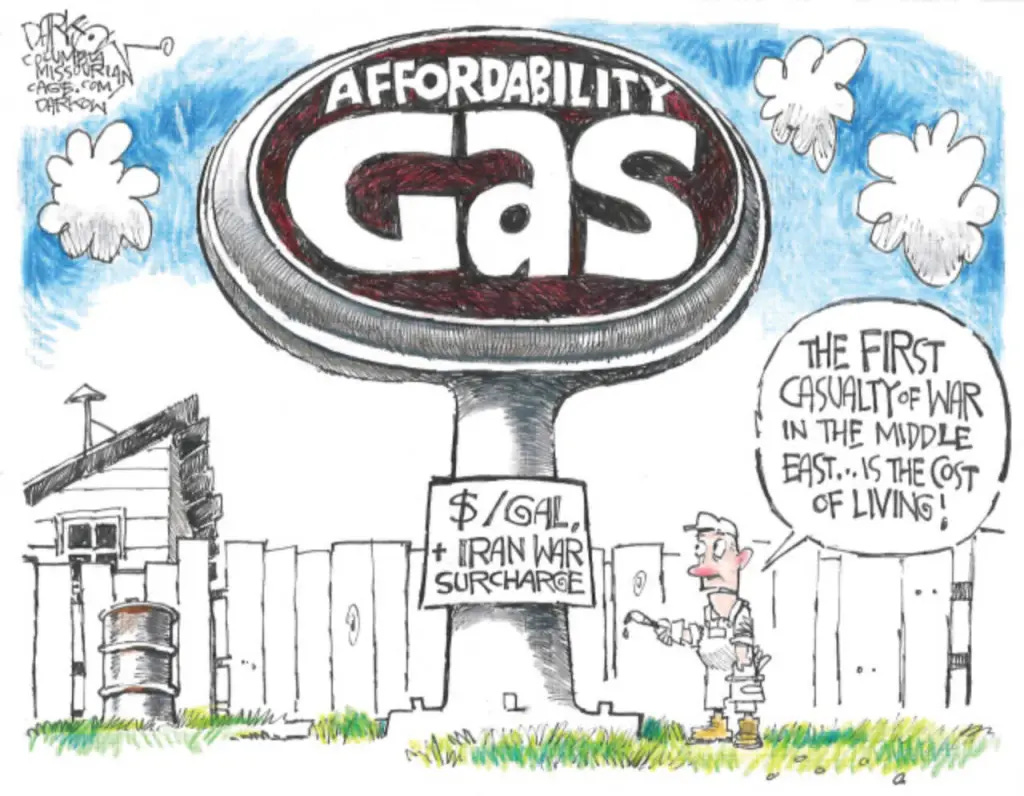
Although we at home will suffer from intensifying inflation in most sectors of our lives, there are a couple of industries, smiling all the way to the bank, defense and the fossil fuel providers. In both cases, they are reaping enormous profits due to the war. Reasonable analysis could see oil hit $ 170 a barrel and the defense industry is in most cases, profiting at similar levels to big oil. This raises another deeply troubling aspect of these profits, insider trading claims against congressmen, administration officials and the Trump family can hardly be ignored. This is pure graft that only rewards a handful of Trumpian elites. Remember this when buying gas, food and your health insurance.
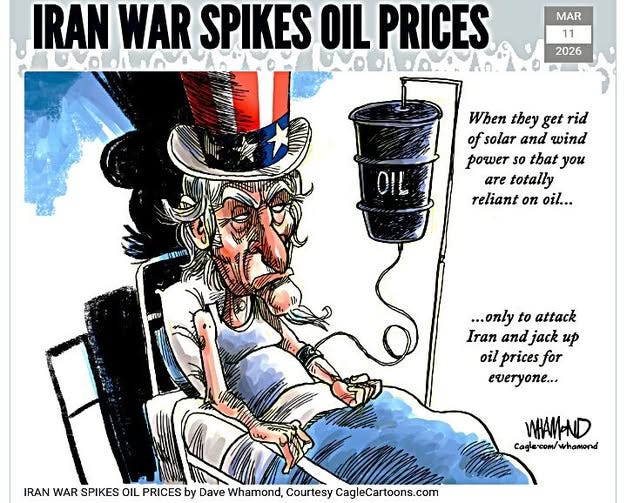
I have no doubts that those who have “allegedly” been profiting from insider trading, are as guilty as can be. It is not a coincidence that Trump administration officials and family, GOP congressmen and close friends of Trump have trades that nearly scream, “look at me,” due to how flagrantly they appear to break the law. While these criminals are emptying our treasury, the American people are suffering terribly from the affordability crisis. This disgracefully planned and incompetently run war, simply makes the crisis worse and by the commentary of all serious economists, will grow worse, even after the war is over, whatever that means to this bungling leadership.
By now, I’m quite certain that readers now have a clear look at where we are and where we’re going, regarding our household budgets. Let’s look now at the military and strategic issues mired in the quicksand of this ill-advised war.
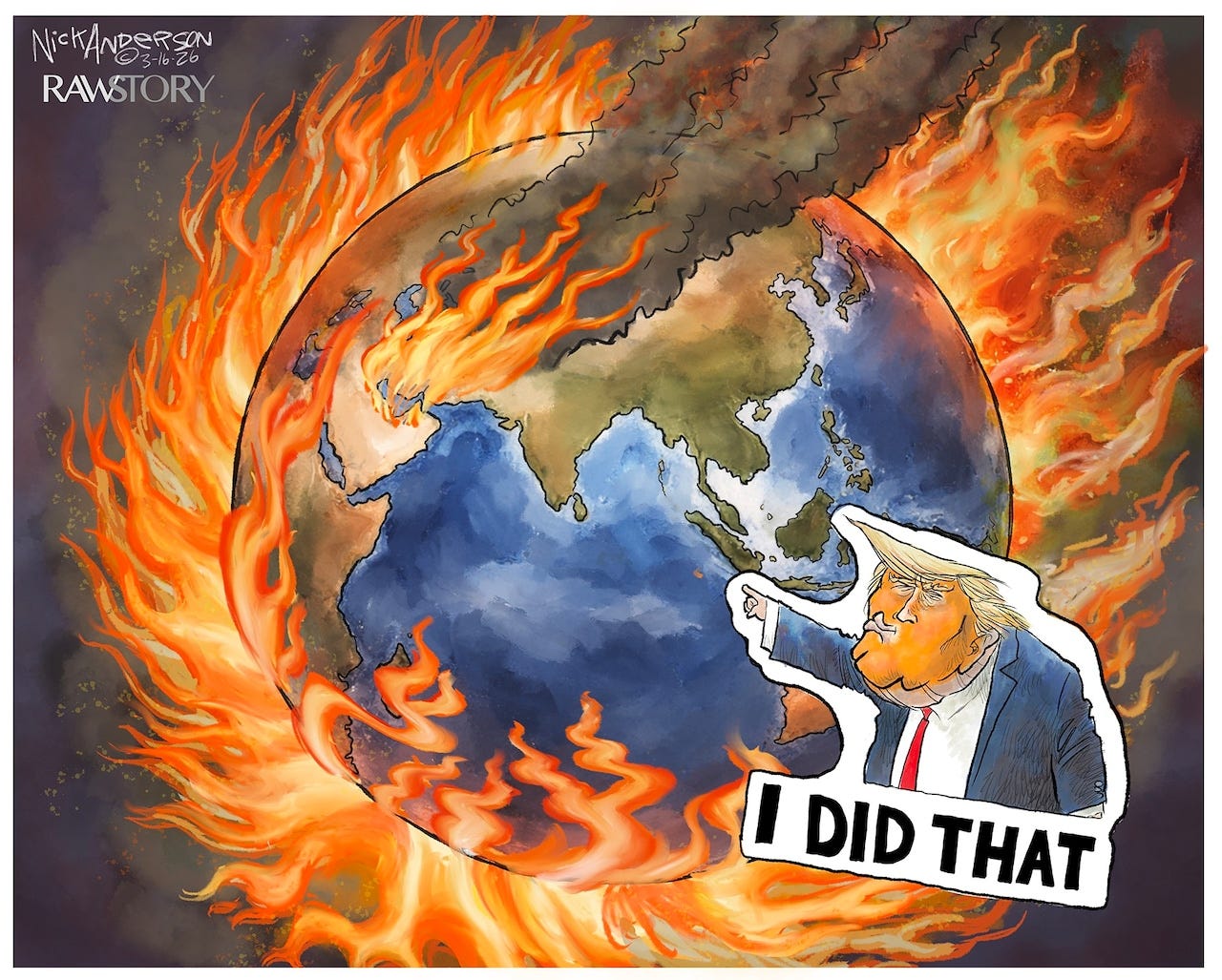
By any standard, this war is not going well for the US. Israel, who had a legitimate cause for attacking Iranian military facilities and senior leadership of the theocratic terrorists in Tehran, has a strategy with outlined objectives. They are succeeding towards their objectives. The US, still without a shred of explanation as to why we’re involved in Iran at all, is failing because, they seemingly have no strategy. This is apparent in a wide variety of ways.
While that we continue to bomb Iran, the American people want to and deserve to know the objectives, the costs, the status of events and when and how, we exit the war with the region or global security situation intact. Bombastic Easter morning and expletive-ridden rant by a desperate POTUS, is demonstrable of leaders like Hitler in WW II, as his precious Third Reich was crumbling. His sanity was long gone, his military depleted beyond recovery and Germany was largely in shambles. If Trump’s ego cannot handle any version of “losing,” he needs an exit strategy right now. There isn’t one at this point.
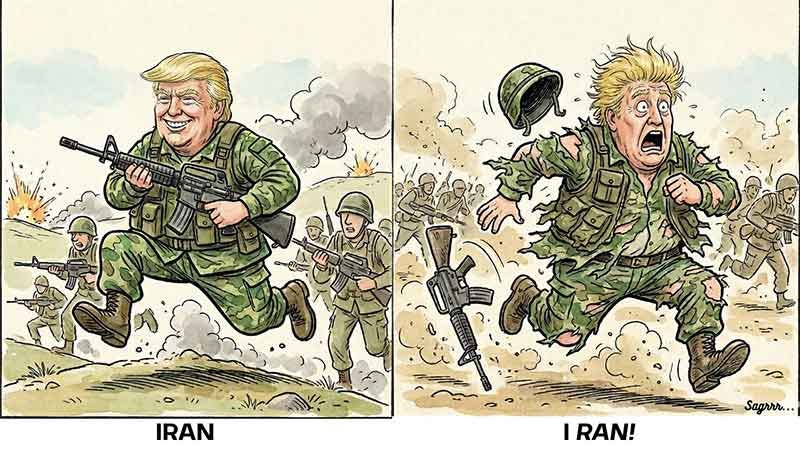
The damage to the world’s gas can, the Persian Gulf cannot recover in weeks or likely months. The shipping through the Straits of Hormuz, is entirely under the control of Iran. Reporting shows that they still retain a little over half of the munitions such as rockets, drones and other missiles. All are capable of shutting down the Straits, should their new leadership demand it. Now that the Suez Canal, another regional waterway is under the guns of the Houthis, across the Bab al-Mandab Strait that controls Red Sea access to the Suez Canal. If we recall last year’s war on the Houthis, we did not necessarily win there either, after having to accept a 2025 ceasefire agreement brokered by Oman, and that only protected US vessels. The Houthis, longtime allies of Iran remain at war with Israel over Gaza and recently announced that they would support Iran in the war against the US and Israel.
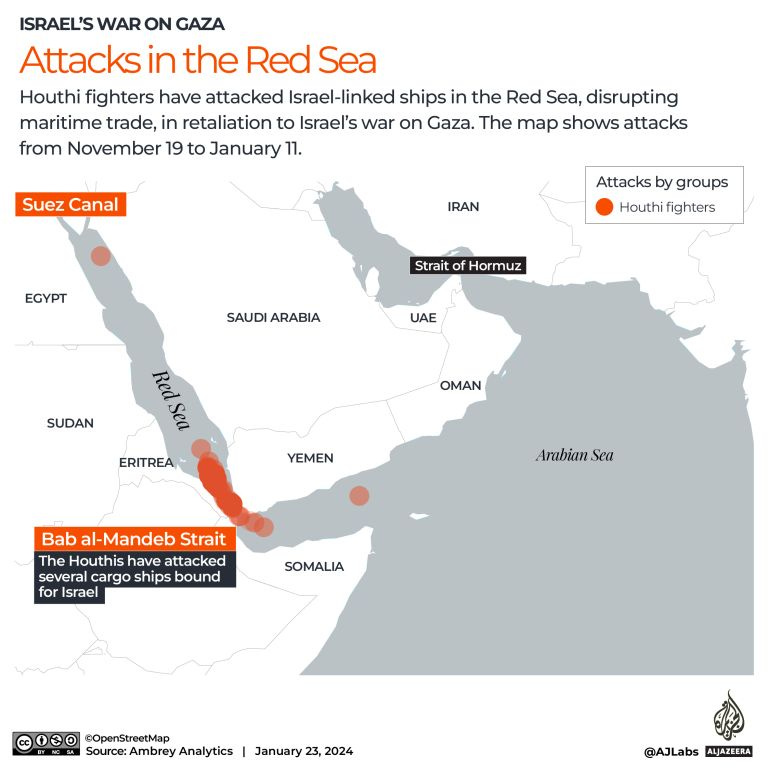
"On November 19, the Houthis hijacked a commercial ship in the Red Sea and have since attacked at least thirty-three others with drones, missiles, and speed boats as of late January 2024. As a result, major shipping companies have stopped using the Red Sea—through which almost 15 percent of global seaborne trade passes—and have rerouted to take longer and costlier journeys around Southern Africa instead. The situation has resulted in heightened shipping and insurance costs, stoking fears of a renewed cost-of-living crisis."

- Conflict in Yemen and the Red Sea
- Council on Foreign Relations
- Center for Preventive Action
- February 28, 2026
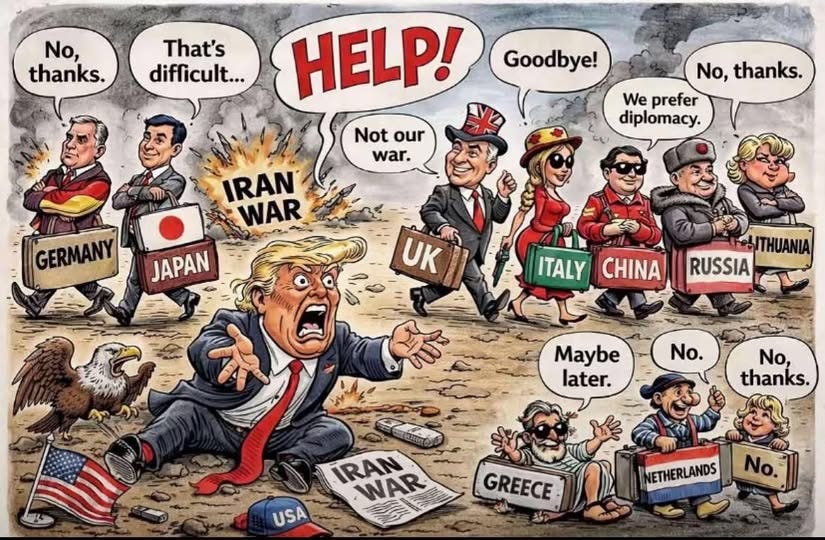
Between the Bab al-Mandab Straits and the Hormuz Strait, Iran can now exercise majority control over these waterways, both critical to the global economy. Add to these threats that both Russia and China are now assisting Iran against the US and Israel in a variety of ways and which includes targeting information about US and friendly forces, and it’s not hard to see the potential for wider global conflict. The US is now alone. Our traditional allies such as NATO, have quite logically remained out of the war, other than in minor support roles.
"The United States will start to move stealth cruise missiles from global stockpiles to use in Iran as the conflict in the Middle East continues to escalate, Bloomberg reported on Saturday, after President Donald Trump declared Tehran's capabilities had been "completely decimated."

According to Bloomberg, the U.S. issued an order to pull from the Pacific stockpiles at the end of March, matching moves by the administration to move other assets previously deployed to the region, such as the Terminal High Altitude Area Defense (THAAD) system from South Korea."

- US to Commit High-Grade Weapons Stockpiles to Iran War—Report
- Newsweek Magazine
- Peter Aitken
- April 4th, 2026
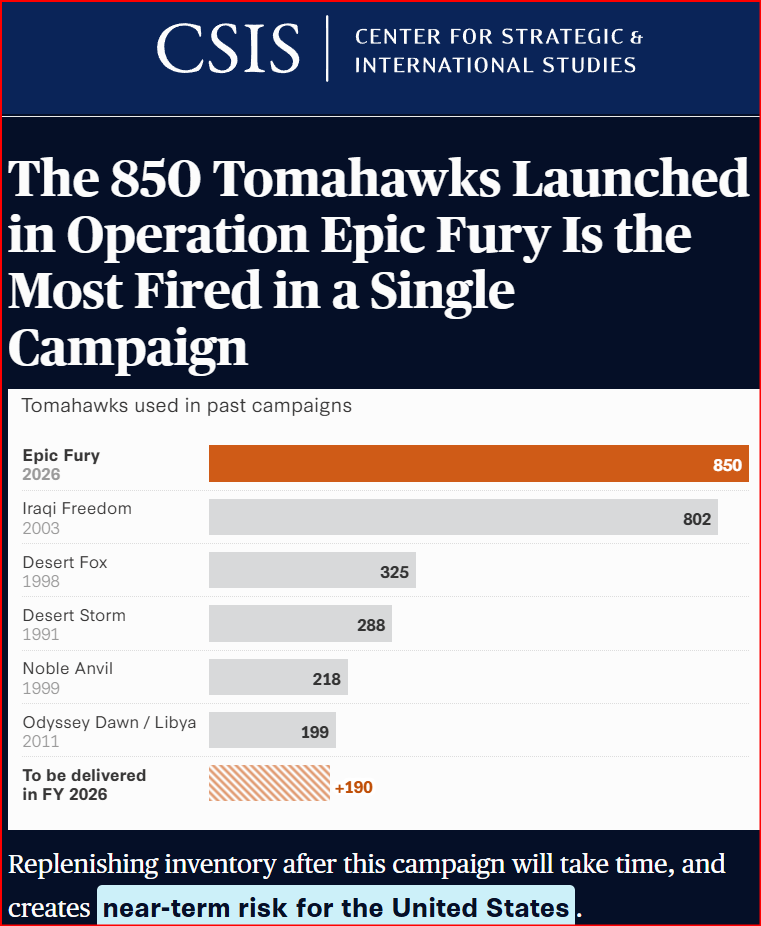
To make matters worse, we’ve now expended more of our mission essential Tomahawk cruise missiles in five weeks of war with Iran, than we did throughout all of Operation Iraqi Freedom. This is a severe depletion of our stockpile of munitions and since we have already borrowed much of the Indo-Pacific command’s stockpile, this leaves us uncomfortably unprepared to deal with any serious Chinese adventurism, including their stated goal of taking Taiwan by 2027. While that NATO is committed to Taiwan, most of NATO’s current focus is on defending Europe from Russian aggression and due to Trump’s visceral disdain for NATO, probably without US assistance. This makes for a bit of a “perfect storm” opportunity for Xi to achieve China’s decades old goal of reunifying China with Taiwan.
As discussed in earlier parts of this series, India is remains an unknown quantity in this global equation. Modi’s India has been a great friend to Putin, especially in regards to helping him evade sanctions on Russian oil. India has recently purchased top-line Russian fighters while also doing some hefty business with Russia’s arms networks. In fact, just last Friday, India approved a “massive $25 billion military modernization package that includes procuring new air-defense missile systems from Russia as well as remotely piloted strike platforms and transport aircraft.” Although India has deepened her military cooperation with the US and Israel for the past decade, India goes where it’s best for India, not necessarily as an ally. She is perfectly capable of juggling these awkward relationships for her own benefit.
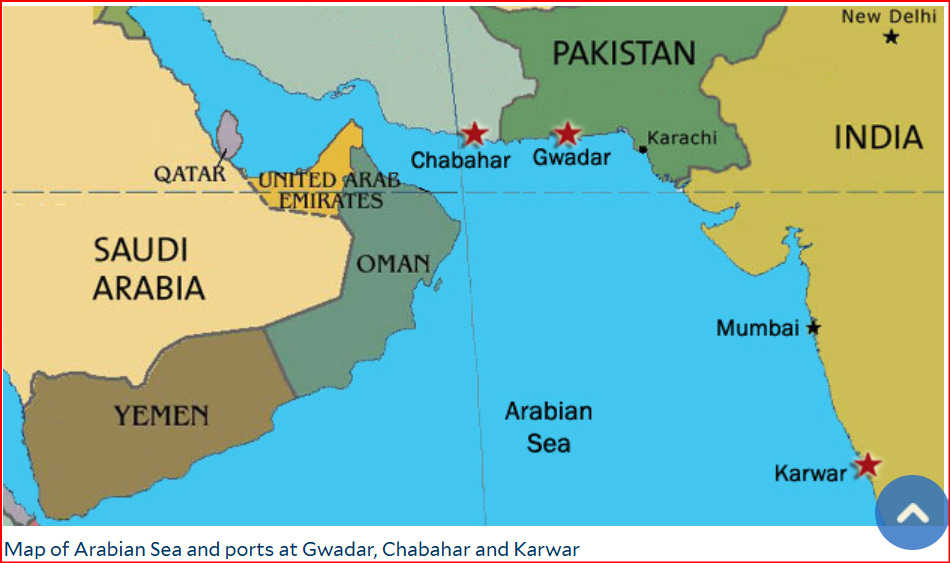
India has the world’s fifth largest economy, despite not having ample fossil fuels to fully drive her large manufacturing sector. Like China, India has invested in a large port near the Pakistani and Iranian border, largely to facilitate the required oil to drive their manufacturing sectors. In return, both India and China help Russia and Iran to evade sanctions on oil purchases. Neither can afford to lose Iranian oil. As the fighting continues in the Persian Gulf and with both the US and Iran threatening infrastructure in and around the Gulf, both China and India have very real concerns about the stability of Persian Gulf oil supplies. Both require oil imports to drive their large manufacturing sectors. Should both or either suffer from insufficient energy sources, it would impact the global economy even further than it already is because of the war. So far, it would seem that Russia is the only winner at the moment, and this is due to dramatic increases in how much a barrel of oil sells for during this war crisis.
I’ll wrap this section up with the so-called “elephant in the room,” which is Trump’s unhinged and expletive-laden rant on social media, Easter Sunday morning. He followed his bizarre rant with a serious threat to bomb Iran’s bridges and power-plants and has set a deadline for 8 p.m. EST tonight. As expected, Iran responded to such a threat by threatening retaliation against the infrastructure of other Gulf States. Trump and his handlers have painted America and her people into a deep dark corner, with few positive options. Sustained attacks by Iran against oil and other infrastructure in places like Saudi Arabia, the UAE, Kuwait etc. would dramatically increase the amount of time to restore any semblance of a normalized Strait of Hormuz.
Summary
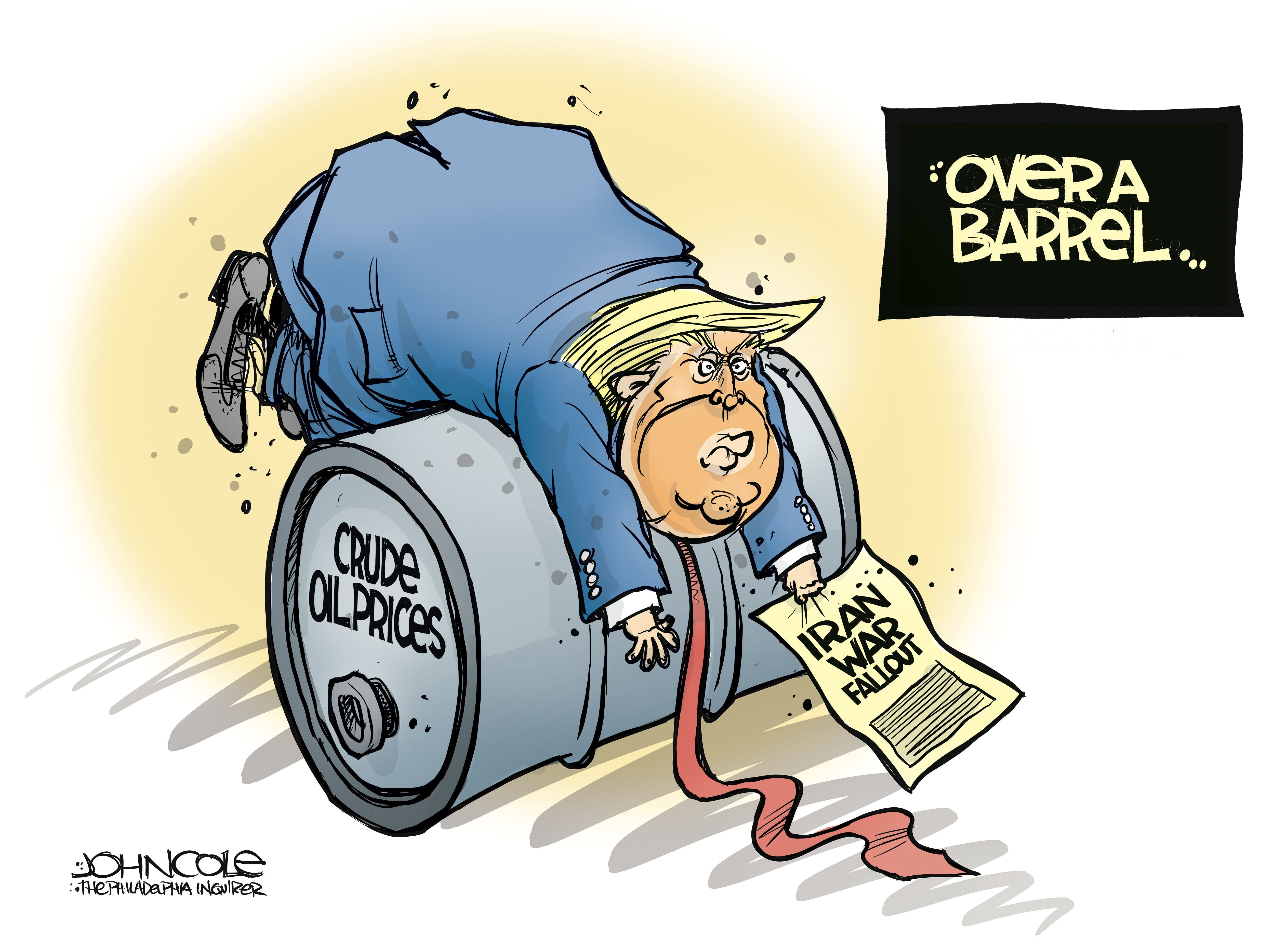
Last evening I was listening to Senator Elissa Slotkin discuss different aspects of the war’s threat to the global economy. A former CIA Officer, Slotkin knows her stuff and has also spent operational time in the region. She stated that if the war stopped tomorrow, it would be 2027 before oil production and shipping returned to pre-war levels. The bottom-line to this is that US fuel prices will remain high and that inflation will remain a threat to our household budgets for the ensuing future. This is what matters most to Americans already stressed by current inflationary trends and the administration’s perpetual chaos.
Still, we must also not forget how edgy all of the world’s superpowers are at the moment. Russia is still being humiliated and depleted by Ukraine’s military, China is undergoing a purge of senior military and CCP leadership and India is stuck between supporting her manufacturing by continuing to help Iran and Russia evade sanctions, while deepening her interests in Israeli and US cooperation. This plus an ever desperate Trump, stymied in his dreams of controlling Gulf oil while disassociating the US from our NATO allies, is by default, a destabilized and dangerous world. Add to this that inflation costs for working Americans are driving deep and committed unrest here at home, means that we all must be ever vigilant in our resistance.
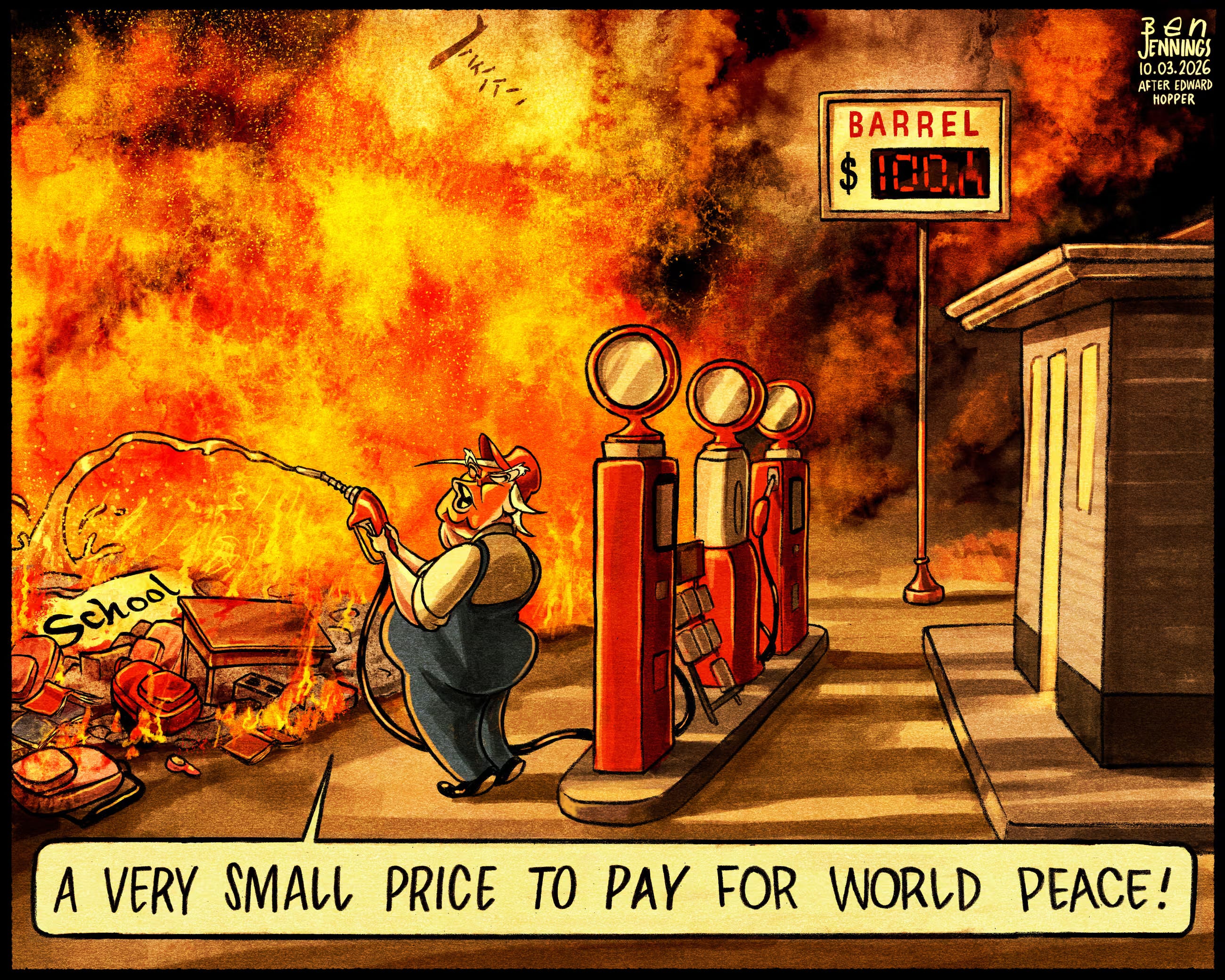
Taking control of our government after the midterms will be our chance to stabilize our republic. This must be followed urgently with restoring a capable and prepared national security community. To be blunt, Americans will both have to pitch in, and be patient as we reconstruct our nation. There are nor will be any quick fixes for the oversized quilombo left by this administration and the Republican Party.
As we can see from all of the data and information included in this essay, the world’s in a fragile state, with wolves at every door. Unity, integrity and enduring persistence are the answers to the threats discussed. We’ve been through worse and can do this, which is a message not often heard in these dark times. As anyone who has ever played or worked on a team knows, even the toughest goals can be satisfying, so long as there is infinite teamwork involved. For two hundred and fifty years, we’ve taken on the hardest jobs and mostly succeeded. There’s no reason to believe that we won’t this time around. One of our Revolutionary War heroes, John Paul Jones laid some of the groundwork for how, with one simple but iconic quote; “don’t give up the ship.” Real American patriots never will, whether it’s a warship or our beloved ship of state.
Onward,
Paul