

TAT readers,
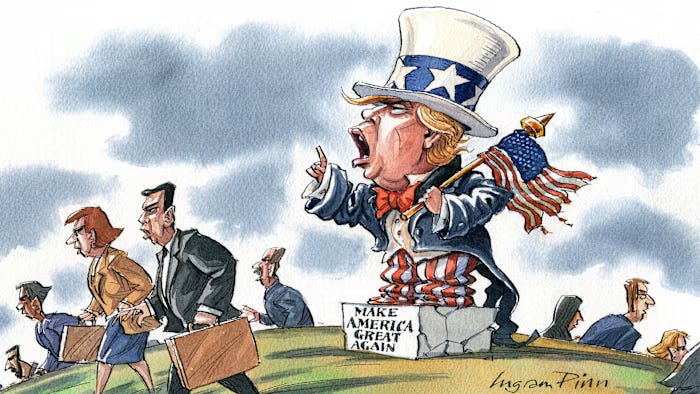
Wow, what a weather week, snowed in with more on the way! I’ve enjoyed the quietly reflective experience immensely. I caught up on some nagging tasks, worked on my next book and generally had more time to talk with family, friends and colleagues on the phone, etc. A topic of one of those discussions with a colleague, formed the core of today’s essay. The topic revolves around how in just one year, Trump and the Republican Party, have turned our global image from one of a beacon of liberty, to a global pariah such as the former Soviet Union.
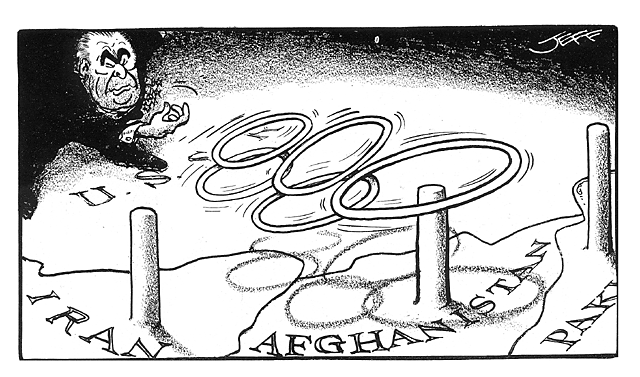
The overall discussion with my colleague was about what, if any leverage global organizations had to impede America’s overt aggression and pursuit of empire. My colleague mused an idea akin to, banning the US from the upcoming Olympics. A wry smile crossed my face, but inside, my mind raced to the fact that there is in a manner of speaking, historical precedence for such an action, the 1980s Olympics. As I turned the events of 1979 and 1980 over in my head while looking for historical correlations, I was struck at how far the US has fallen in global stature, in just over a year of the current regime. The bottom line is, the United States no longer leads the free world and is now viewed askance, by foes and former allies alike. Trump’s boorish unilateralism, has either driven away friends and allies or put them cautiously, at arms-length.
As that I was raised during the height of the Cold War by a history and government teacher, I have some deep, first-hand insights, that may be less apparent to younger readers, regarding the decades-long duel for power, between the free world and Soviet expansionism. The correlation of the 1980s Olympic Boycott, to the conversations with my colleague this morning, are worth exploring in today’s essay, relative to America’s current role in the world. History may or may not exactly repeat itself, but it is surely instructive for those who pay attention.
A short story of the US-led Olympic Boycott of the 1980 Moscow Olympics
Below is President Carter’s declaration of what America stands for.
"But it is absolutely imperative that we and other nations who believe in freedom and who believe in human rights and who believe in peace let our voices be heard in an absolutely clear way, and not add the imprimatur of approval to the Soviet Union and its government while they have 105,000 heavily armed invading forces in the freedom-loving and innocent and deeply religious country of Afghanistan. Thousands of people's lives have already been lost. Entire villages have been wiped out deliberately by the Soviet invading forces. And as you well know, the people in the Soviet Union don't even know it. They do not even realize that 104 nations in the United Nations condemned the Soviet Union for their invasion and called for their immediate withdrawal from Afghanistan. The people of the Soviet Union don't even know it."

- Remarks to Representatives of U.S. Teams to the 1980 Summer Olympics
- The American Presidency Project
- President Jimmy Carter
- March 21st, 1980
The story
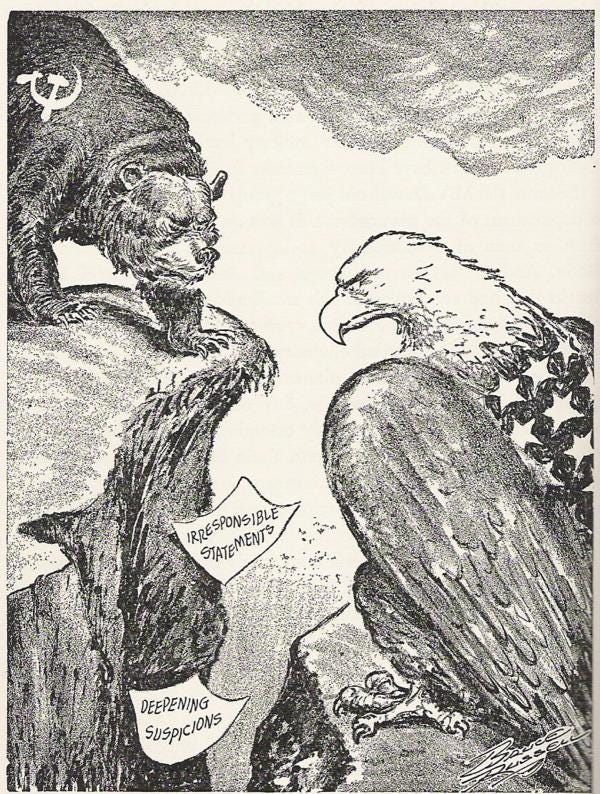
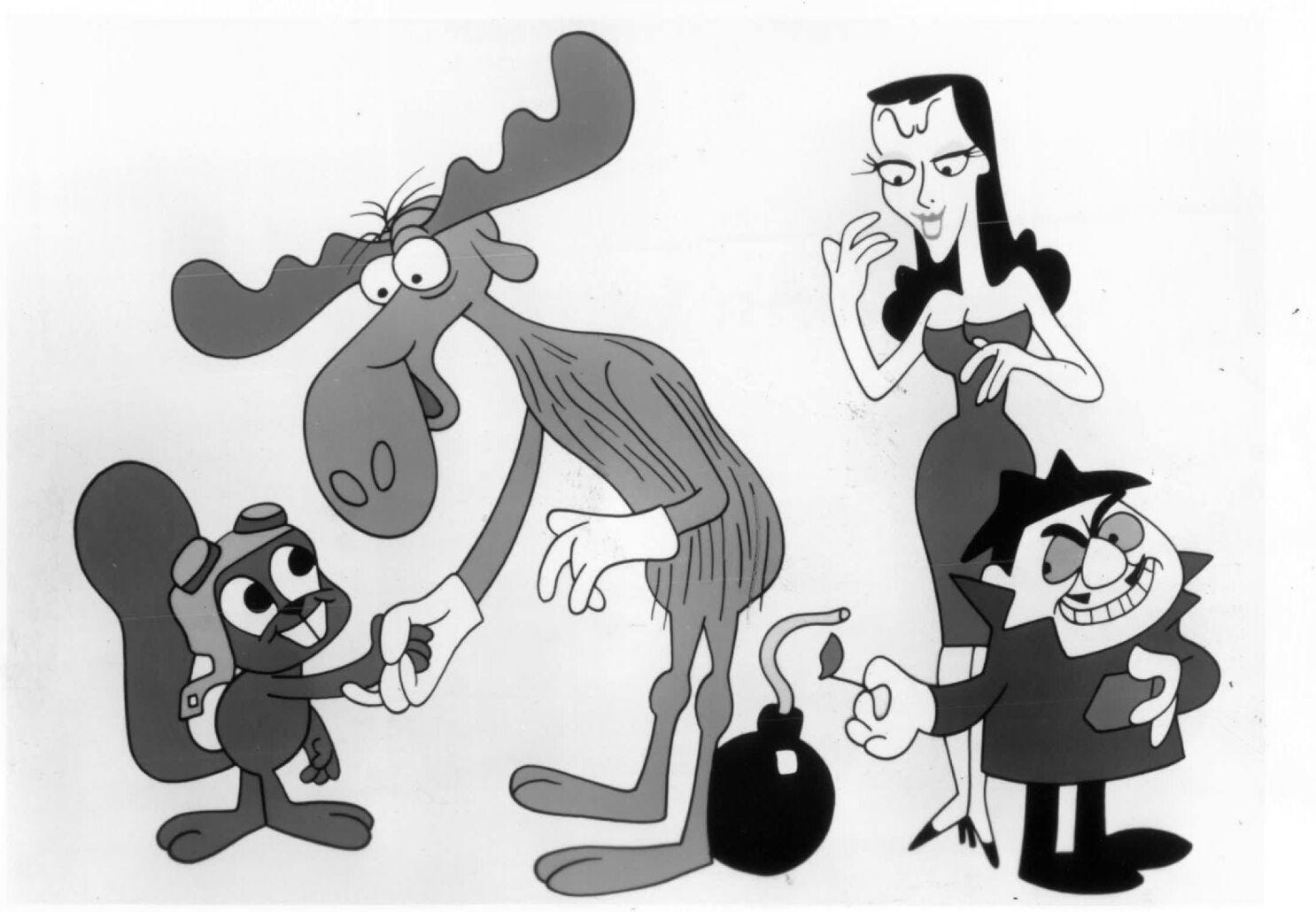
Today’s children practice active shooter drills at school and pre-school, but those of us raised during the height of the Cold War, practiced “duck and cover,” nuclear war drills, either curled up with knees to our chests, under our desks, or under the big windows lining our classroom. The ongoing global war between Communism, led by the globally acknowledged evil empire, the Soviet Union vs. Democracy, led by the US and our NATO allies, permeated our daily lives. Cities had Civil Defense Shelters and resources dedicated to relief and survivability, should those evil Soviets wage the unthinkable nuclear war. Even one of my favorite cartoons, Rocky and Bullwinkle, included “Boris and Natasha,” the evil Soviet “bad guys.” Instant distrust of anything Soviet became the norm everywhere in the free world. That condition existed until the Trump era.
Russian and Chinese support for North Vietnam clearly demonstrated Soviet willingness to commit to actual aggression in their pursuit of a communist-in-name-only, empire. That aggression and competition played out on a global stage at every new set of Olympic games with accusations of cheating, drug and hormone scandals and the predictable violence on the basketball court in games against the Soviets or prominent Eastern Bloc nations, East Germany in particular.
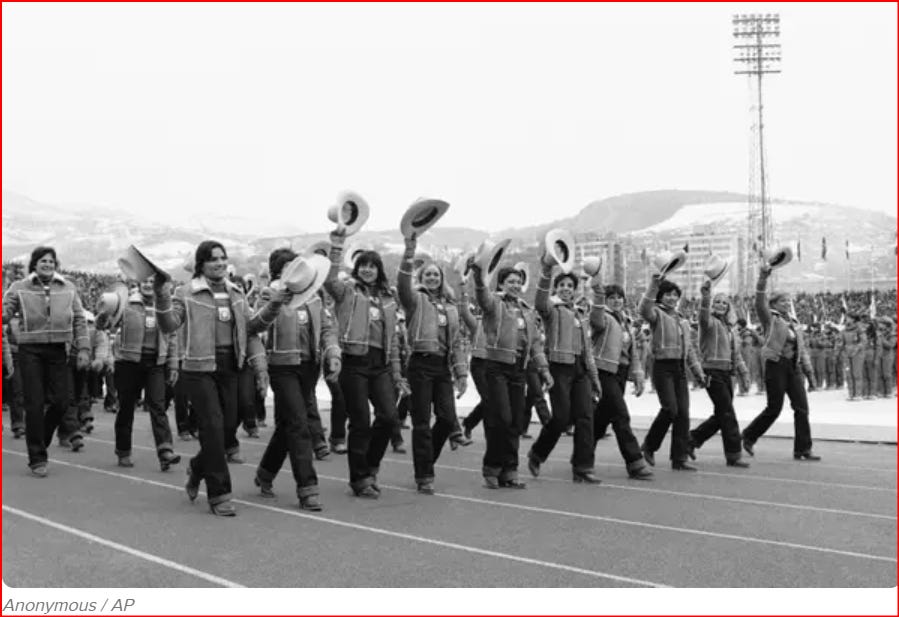
The free world and those oppressed in the Communist world, cheered collectively against the Soviet bloc, the Soviets in particular. They were the universal “bad guys” and everyone understood this. I’ll never forget 1984, the year Americans and the world cheered when American athletes at opening ceremonies entered in white cowboy hats, subtly saying, “here come the good guys.” With the former Soviet Union near its Zenith in 1984, those white hats were an honest representation of what most Americans believed in, regardless of their politics. The entire world believed too. That’s why the story of the 1980’s Olympic Boycott matters so much to this story and as a lesson in what it means to stand up for principles. Now, the Trump administration in conjunction with the omnipresent GOP subservience, have in the space of one year, fully swamped America’s “good guy” image on the global stage. We not only don’t any longer lead, but we’re no longer even on the list of good guy nations.
Geopolitically, the world was coming apart in 1979. We experienced the Iranian revolution, the hostage crisis, a global Islamic revolution and mostly as it pertains to this story, the characteristically brutal, Russian invasion of Afghanistan, rocking the geo-political world. The world had reached its limit with Soviet aggression as preparations began in earnest, for the 1980 Olympic games in Moscow. Despite attempts to sway the Soviets to abandon Afghanistan, they refused. In his attempts to pressure Soviet leader Leonid Brezhnev, Carter put a few measures on the bargaining table. These measures included the threat of a grain embargo, the withdrawal of the SALT II agreement from Senate consideration, and a possible boycott of the 1980 Summer Olympics.
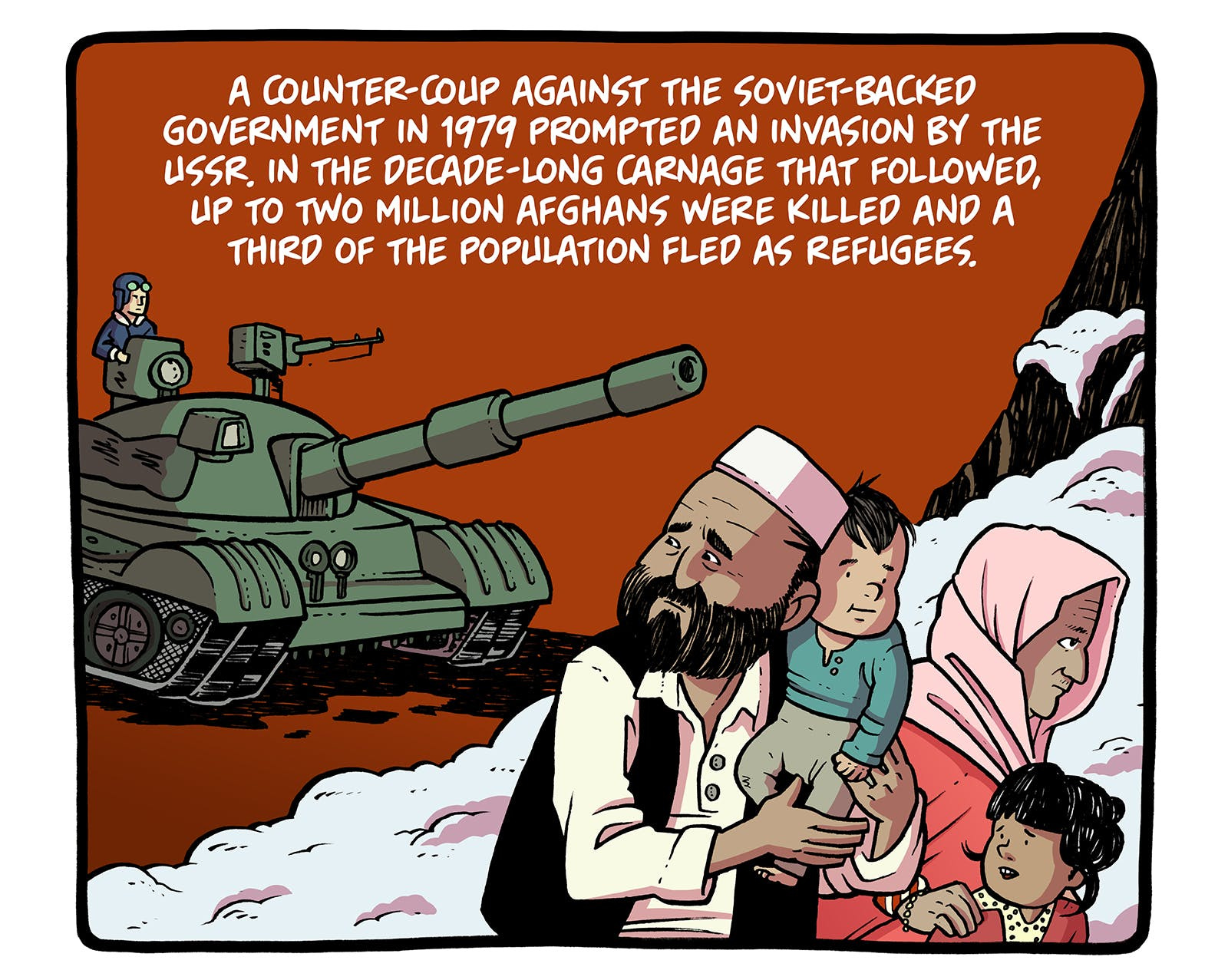
"Western governments first considered the idea of boycotting the Moscow Olympics in response to the situation in Afghanistan at the December 20, 1979 meeting of NATO representatives, although at that time, not many of the governments were interested in the proposal. The idea gained popularity, however, when Russian dissident Andrei Sakharov called for a boycott in early January. On January 14, 1980, the Carter Administration joined Sakharov by setting a deadline by which the Soviet Union must pull out of Afghanistan or face consequences including an international boycott of the games. When the deadline passed a month later without any change to the situation in Central Asia, Carter pushed U.S. allies to pull their Olympic teams from the upcoming games."

- The Olympic Boycott, 1980
- US State Department Archives
Sixty-five nations supported the boycott and did not send athletes to the games. Of those that did attend, many refused to attend the Opening ceremonies. From every possible perspective, the 1980 Moscow Games were a disaster as an event, and for the image of the Soviet Union. They had peaked as an empire, were hollow of values and relied on dishonesty in competition, whether geo-politically or in an Olympic event to win. The 65 nation boycott, said to the world, that Soviet aggression under false and greedy pretenses, was not acceptable. Forty-six years later, we are now preparing to go to the games… as the aggressor nation that just went to war with and is now dictating foreign and domestic policy for Venezuela.
 "In the spring of 1980, the United States government faced a foreign-policy decision with Olympic-sized consequences. The previous fall, the Soviet Union had invaded Afghanistan to expand its sphere of influence. It was a shocking decision, made even more so given that Moscow was slated to host the international community at the 1980 summer Olympic games in July.

Following the invasion, lawmakers in Congress questioned whether America should allow its delegation of athletes to compete in Moscow. To allow U.S. athletes to attend the games risked sending a message to the world that the federal government condoned the Soviets’ war. Blocking their participation, however, meant dashing the dreams of hundreds of young Americans who had trained for years to compete in the storied sporting event.

For four decades, the Cold War standoff between the American and Soviet superpowers had left the world on edge. Proxy wars and the threat of nuclear conflict had stalked the years after World War II. But it was the pre-World War II Olympics in Nazi Germany’s Berlin in 1936 that legislators suddenly invoked during debate over whether the United States should send a delegation to Moscow."

- Whereas: Stories from the People’s House: The Cold War, the Olympics, & the Forgotten Congressional Gold Medal by History
- History, Art and Archives, The United States House of Representatives
- July 30, 2024
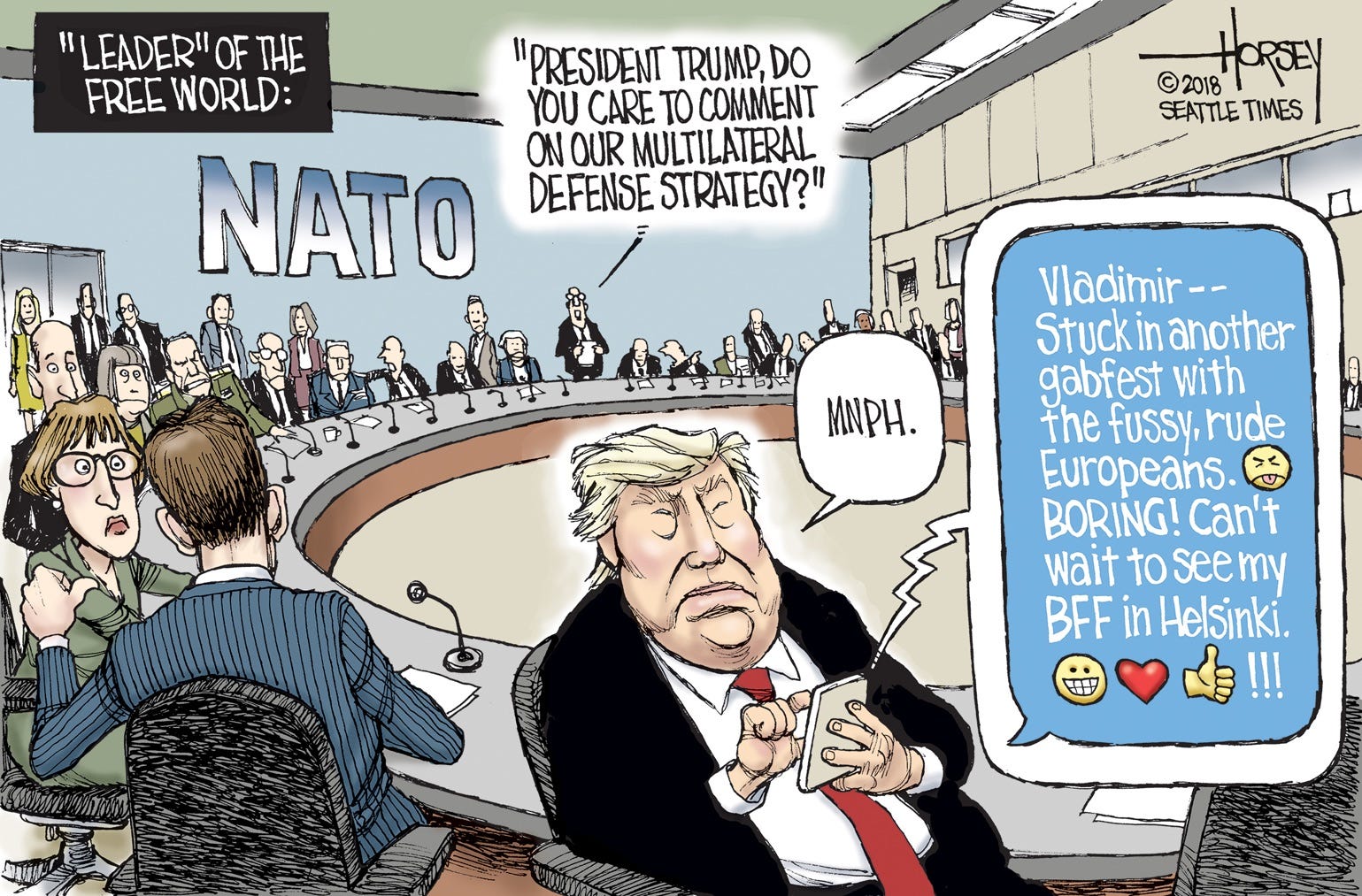
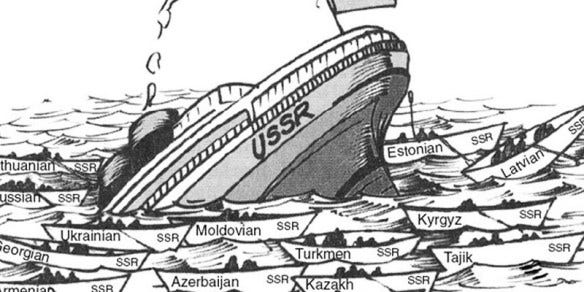
At issue for the boycott was Soviet aggression and the boycott, mimicked by the Soviets during the 1984 Olympics, called extraordinary negative attention onto the Soviets and at a time they could least afford it. Before the end of the decade, the Berlin Wall would fall and the Soviet Union just two years later. The so-called “good guys” had won the Cold War. Now, after going to war and occupying Venezuela, with our sights set on Cuba and other nations, we have become the “bad guys.” Our tariff wars against friend and foe, have made us untrustworthy as well as being the bad guys. Our preference for dictators and other authoritarians over our allies, makes us not only bad guys in the eyes of the world, but dangerous as well.
In 1980, we led the world against global aggressors, now we have become one. There is nothing “American” about this, nothing at all. The administration’s anti-NATO interests, threaten the last remaining bastion of western liberal democracy, our allies in Europe. No, this is not what America stands for, not the real America. This version of our once proud nation, is now best identified as, The four horsemen of the MAGA Apocalypse: Autocracy, Oligarchy, Christian Nationalism and Political Violence. What happens when what’s left of the free world, begins treating the US now, as the US-led free world did the Soviet Union in 1980? This is not an outlandish question these days.
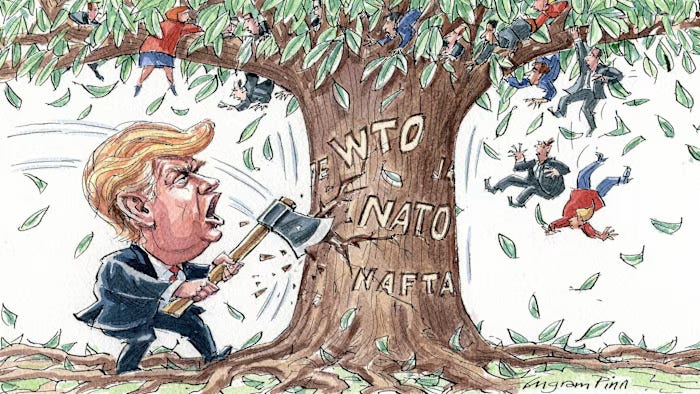
Already, NATO allies are drawing up contingency plans for what happens if as Trump declared, the US may not come to the aid of a NATO ally that has invoked Article 5. So who is leading the free world now? This at the moment hasn’t yet been revealed but one thing for certain, it’s no longer us. We weren’t so much removed from our leadership role, but abdicated it via the ballot box. It’s not just NATO either. Nearly three weeks ago, the US by way of presidential decree, announced our withdrawal from 66 international agencies. To use a little folksy wisdom, “we can’t lead a world that we are withdrawing from.”
"WASHINGTON (AP) — The Trump administration will withdraw from dozens of international organizations, including the U.N.'s population agency and the U.N. treaty that establishes international climate negotiations, as the U.S. further retreats from global cooperation.

President Donald Trump on Wednesday signed an executive order suspending U.S. support for 66 organizations, agencies, and commissions, following his administration's review of participation in and funding for all international organizations, including those affiliated with the United Nations, according to a White House release."

- U.S. will leave 66 international organizations as Trump further retreats from global cooperation
- PBS News
- By Matthew Lee, Associated Press, By Farnoush Amiri, Associated Press
- January 7th, 2026
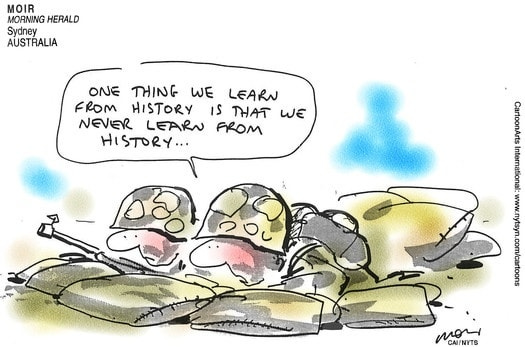
As I bring this essay to a close, I’m glad that my colleague’s comment this morning, prompted this essay. I felt it was worth turning over the ramifications of both withdrawing from the world, while being concurrently being shunned by the world. After their invasion of Afghanistan and being shunned at the 1980 Moscow Olympics, the Soviet Union slowly but surely, unraveled and retreated from the world stage. These are wise lessons learned from understanding relevant history. The only question that remains, is whether or not we heed those painfully acquired lessons.
My very best to all,
Paul
Hi Paul,
Once again you have written an interesting if totally disingenuous article lacking in evidence but abounding in dyspeptic opinion. To claim that the United States has become "a global pariah" on a scale with "the former Soviet Union" is quite a stretch even by your standards. And stooping to quote the worst president in the 20th century, Jimmy Carter, to prove your point hardly embellishes your thesis. I find it nothing short of amazing that you would appear to be satisfied with the mediocre performances of a Jimmy Carter or, more recently, Joe "Auto-Pen" Biden who made our country an international laughing stock rather than actively supporting the efforts of the current Trump administration to restore America to its rightful position of respected leadership in the world. I would truly wish to be proven wrong in my assessment but so far the evidence is lacking.
V/R
Doc B